
Published in the Performance Improvement Journal.
Executive Summary
A systems-based performance improvement initiative addressing technician burnout, workforce shortages, and supervisory inconsistency within a national commercial refrigeration organization. The analysis combined Human Performance Technology (HPT), root cause investigation, technician survey data, and AI-supported exploration of qualitative observations to design targeted, multi-level interventions supporting workforce sustainability.
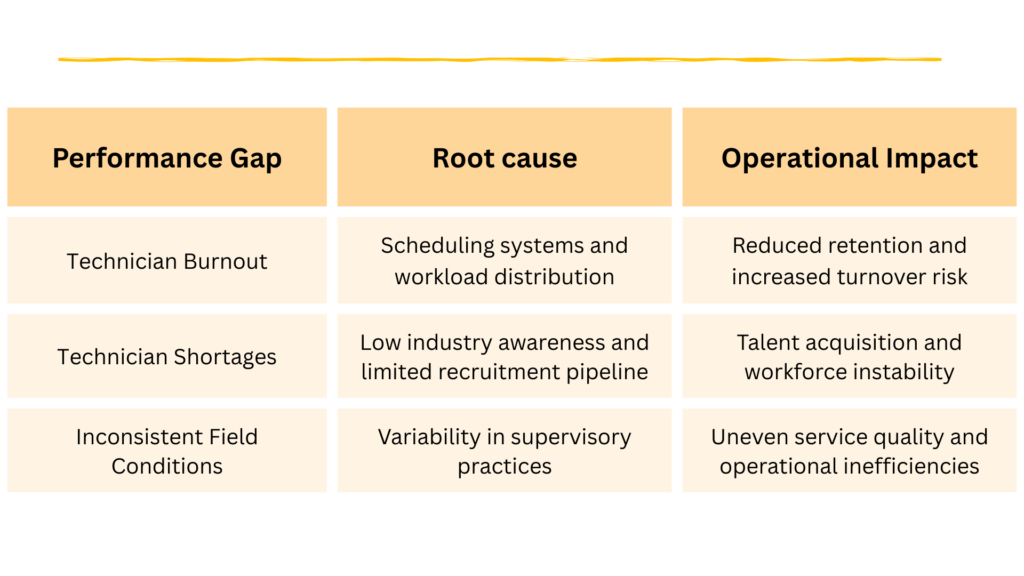
Gap Analysis Summary
(Based on HPT Framework & Technician Survey Data)
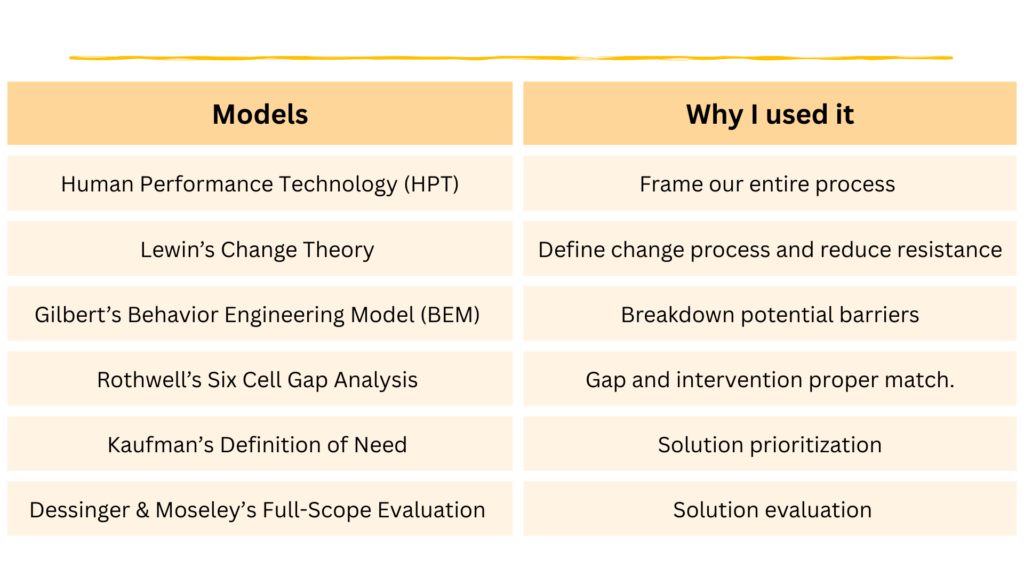
Frameworks Guiding the Analysis
The diagnostic and intervention design process was guided by established performance improvement frameworks to ensure that identified gaps were analyzed systematically and that proposed solutions addressed root causes rather than symptoms.
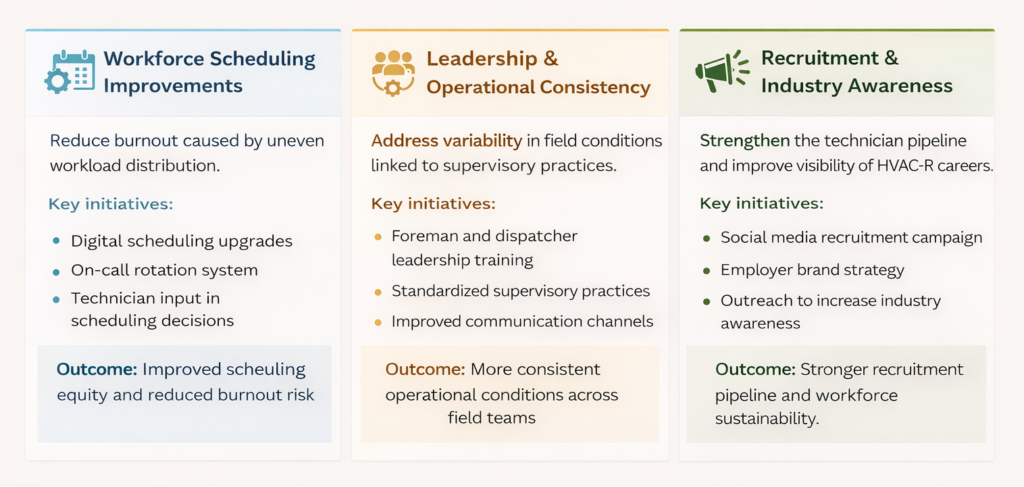
Intervention Strategy
Based on the performance analysis, a set of targeted interventions was designed to address the identified root causes while supporting long-term workforce stability and operational consistency.
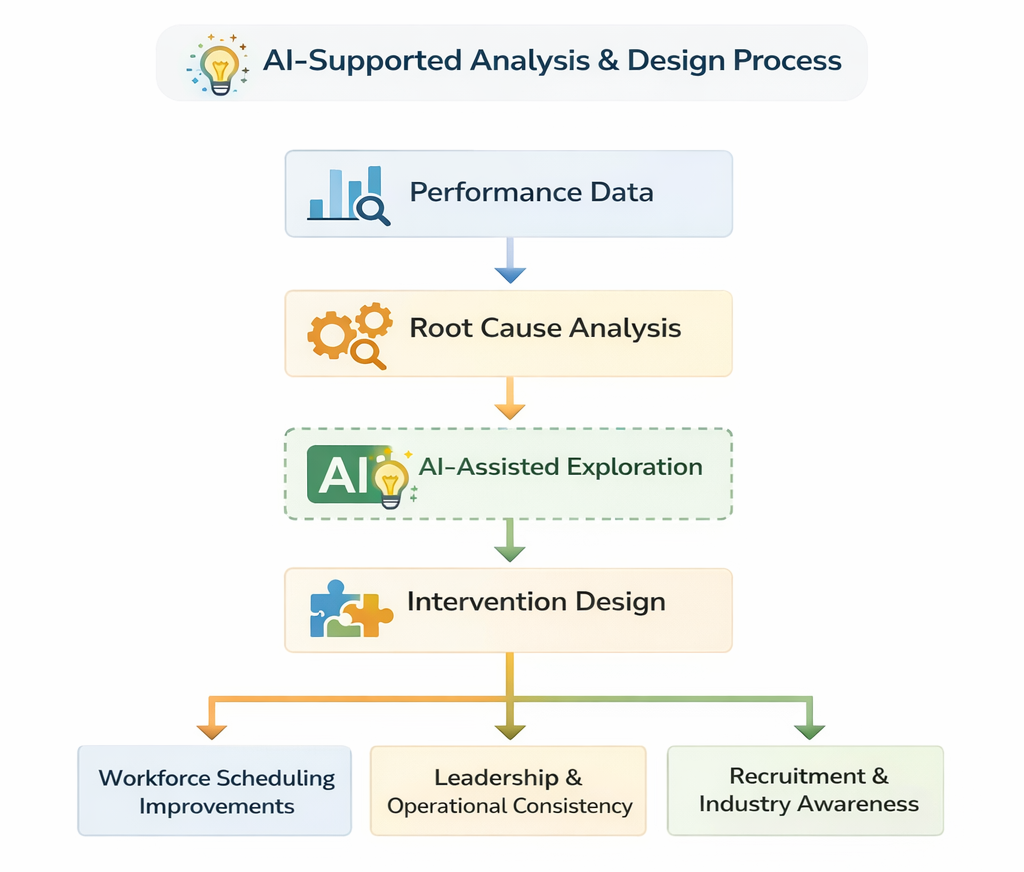
AI-Supported Analysis Process
AI tools were used during the analysis and design phases to help explore patterns in qualitative data, organize observations, and accelerate the development of potential intervention strategies.
Strategic Outcome
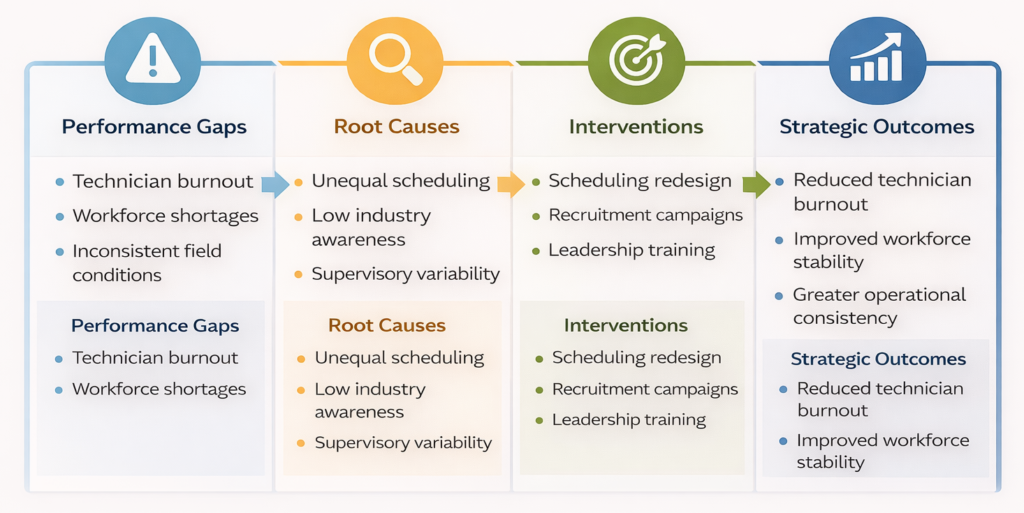
The strategic interventions were designed to align solutions with performance gaps for sustainable improvement.
Broader Applicability
Although this initiative was designed for a commercial refrigeration organization, the performance improvement approach is applicable across many skilled trade industries facing similar challenges in workforce retention, burnout, and recruitment pipeline development. By combining systematic performance analysis with targeted organizational interventions, organizations can move beyond training-only solutions and address the environmental and operational factors that drive performance outcomes.
*This work was later recognized through publication in the Performance Improvement Journal, the flagship publication of the International Society for Performance Improvement (ISPI).